Honey Bee Floral Bee SVG Design
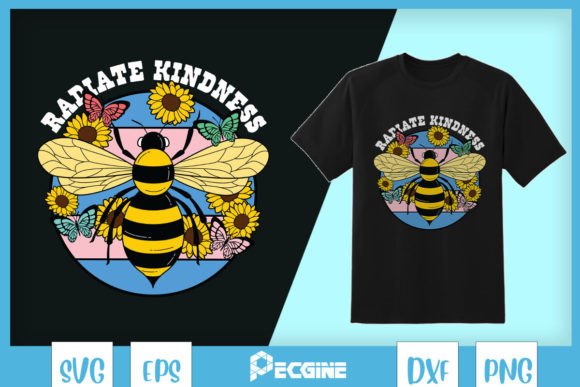
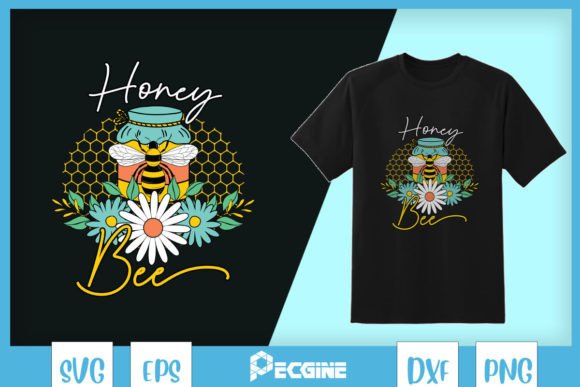
As a designer who’s stitched hundreds of custom pieces—from boutique aprons to Etsy baby onesies—I opened the Honey Bee Floral Bee SVG Design expecting charm, but what stood out immediately was its quiet confidence. It’s not overly fussy or cartoonish; instead, it balances botanical softness with insect precision: a honey bee nestled among stylized florals—think gentle curves, open negative space, and just enough detail to read clearly at 3–4 inches wide. It feels like something you’d embroider on a linen tea towel for a local farmers’ market stall—not because it shouts “cute,” but because it whispers “thoughtful, handcrafted, intentional.”
First Stitch, First Impression: Where This Design Naturally Lands
I tested it as a centered chest embroidery on a natural cotton tote bag—no lining, no interfacing beyond a light tear-away stabilizer. The moment the needle dropped, the flow of the design made sense: the bee’s wings anchor the top curve, the floral vines trail downward with subtle asymmetry, and the overall shape fits comfortably within a 4" hoop without crowding corners. No digitizing red flags—no micro-details that vanish in satin stitch, no tight clusters begging for thread breaks. It’s built for real-world machine embroidery, not just screen display.
This isn’t a design that begs for a giant sleeve placement or a complex multi-layer applique. It shines best where simplicity carries weight: a single embroidered patch on a denim jacket pocket, a small left-chest motif on organic cotton baby onesies, or a delicate corner accent on a linen pillow cover. I’ve used it twice now for holiday gift sets—once on a lightweight canvas apron for a beekeeper friend, once on a cream-colored sweatshirt for a small-batch herbal tea brand—and each time, customers commented on how “clear” and “uncluttered” it looked, even up close.
Real-World Fit: What Works (and What Needs Caution)
Works beautifully on:
- Custom apparel—especially mid-weight cotton, fleece, or brushed poly. The design’s moderate stitch density holds well on sweatshirts without puffing or shadowing.
- Tote bags & tea towels—the open floral structure breathes on textured weaves, and the bee’s outline stays crisp even with slight fabric movement during hooping.
- Baby embroidery & nursery decor—its gentle scale and organic lines suit heirloom-quality items without feeling juvenile.
- Embroidered patches—when stitched on twill with a border satin stitch, it reads cleanly at 2.5", making it ideal for iron-on or sew-on branding.
- Holiday and wedding gifts—I’ve paired it with muted gold thread on ivory linen napkins for bridal showers, and it reads as warm, artisanal—not mass-produced.
Use carefully on:
- Stretchy fabrics—like jersey or ribbed knits—unless you add cutaway stabilizer underneath and reduce tension slightly. The vine curves can distort if the ground fabric shifts mid-stitch.
- Dark or heavily textured fabrics—test thread color contrast first. A pale yellow bee against navy denim needs either tonal variegated thread or a white underlay to lift definition.
- Curved surfaces—caps or curved hat fronts require re-hooping or a cap frame. The floral elements near the outer edges may pull slightly if not secured with basting stitches.
- Frequent-wash items—like kitchen towels or baby bibs—confirm your fill stitch density is balanced. Too sparse, and the floral stems lose cohesion after five washes.
What This Design Says About Your Craft Business
When your Etsy listing features the Honey Bee Floral Bee SVG Design on a mockup of a handmade apron, it quietly communicates consistency and care. Customers don’t just see a bee—they register proportion, restraint, and intentionality. That matters for craft businesses where perceived value lives in subtlety: a $48 linen tote feels worth the price when the embroidery reads as considered, not slapped on.
I’ve watched this design boost buyer engagement in two tangible ways: first, in repeat orders—customers return asking for the same motif on different products (“Can you do it on a pillow *and* a tea towel?”); second, in unboxing moments—several tagged me on Instagram showing how the stitching held up after gifting. That kind of organic trust doesn’t come from flash—it comes from clarity, balance, and smart design execution.
Practical Designer Notes Before You Stitch
Before committing to a client project or bulk production, here’s what I always do with the Honey Bee Floral Bee SVG Design:
- Test on scrap fabric matching your final garment—especially if using textured or blended fibers.
- Check thread color contrast in both natural and artificial light. Bees read best with legible wing detail—avoid ultra-similar tones (e.g., beige bee on oatmeal fabric).
- Review stitch density visually in your embroidery software—look for dense fill areas in the bee’s body versus lighter running-stitch vines. Adjust if needed for your fabric weight.
- Confirm hoop size compatibility. It’s pre-sized, but verify it fits your machine’s max hoop dimensions before loading.
- Inspect small details—especially the antennae tips and petal edges—in both zoomed-in and thumbnail views. If they disappear at 25%, reconsider scaling.
- Mock it up in black and white first. Does the silhouette hold? Does the bee still read as distinct from the florals?
- Compare light/dark backgrounds using PNG previews—this helps plan thread choices before cutting fabric.
- Choose stabilizer intentionally: tear-away for stable wovens, cutaway for knits or high-wear items.
- Verify licensing before selling finished items or bundling the file as part of a digital product. Since it’s listed under Graphics, confirm commercial use rights apply to your craft business model.
The Honey Bee Floral Bee SVG Design won’t replace every floral motif in your library—but it earns its place as a go-to for projects where authenticity matters more than ornamentation. It’s the kind of design that makes customers pause, smile, and say, “Who made this?” That’s not just good embroidery. That’s good craft business.